|
|
||
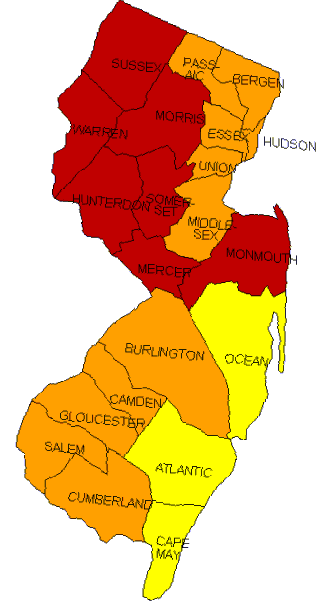
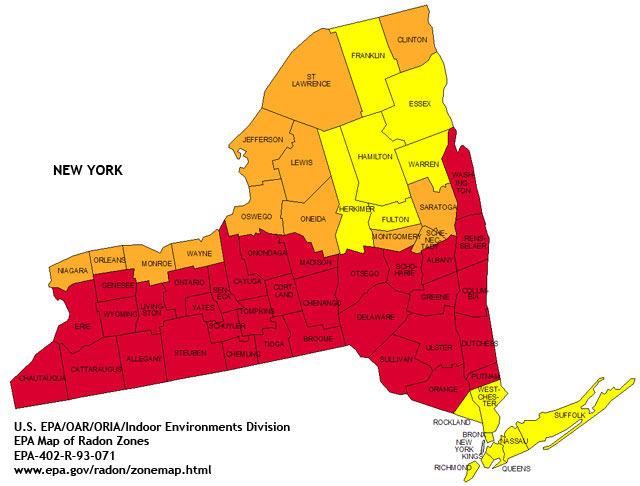
New York: |
ORANGE SULLIVAN ROCKLAND MANHATTAN & WESTCHESTER  |
||
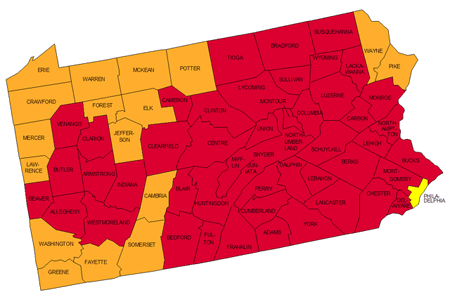
Pennsylvania: |
BUCKS PIKE MONROE LEHIGH NORTHAMPTON CARBONA |
SCIENTIFIC RADON PRESENCE TESTING
|
|
||
New York: |
ORANGE SULLIVAN ROCKLAND MANHATTAN & WESTCHESTER |
||
Pennsylvania: |
BUCKS PIKE MONROE LEHIGH NORTHAMPTON CARBONA |
NEW JERSEY INDOOR ENVIRONMENTAL HEALTH SCIENCES |
*INVESTIGATIONS & ANALYSIS FOR FAMILY HEALTH - REAL PROPERTY LEGAL/FORENSIC- WE SELL NOTHING * |
|
|
INSPECT FOR MOLD AND EMF/EMR RADIATION BEFORE YOUR REGULAR HOME INSPECTION 2ND OPINIONS WITH FULL MEDICAL / LEGAL CERTIFICATION |
|
|
||||||||||||||||||||||||||||||||||||||||||||||||||||||||||||||||
Radon reported in kitchen counter tops should not have been surprising since radon is to be found naturally occurring in ground minerals. The amount of radon in granite and marble can be measured if you have a concern.Radon Is a Cancer-Causing, Radioactive Gas- Dana Reeves, a non-smoker who died of lung cancer is believed to have died due to radon gas exposure.You cannot see, smell, or taste radon. But it still may be a problem in your home. When you breathe air containing radon, you increase your risk of getting lung cancer. In fact, the Surgeon General of the United States has warned that radon is the second leading cause of lung cancer in the United States today. If you smoke and your home has high radon levels, your risk of lung cancer is especially high.
In February 1998, the National Academy of Sciences (NAS) released its report on radon and lung cancer, The Health Effects of Exposure to Indoor Radon (the BEIR VI report). The NAS is an independent, non-governmental, scientific organization. The NAS estimates that radon causes between 15,000 and 22,000 lung cancer deaths each year in the United States and that 12 percent of all lung cancer deaths are linked to radon. The BEIR VI Committee (Biological Effects of Ionizing Radiation) concluded that after smoking, radon is the second leading cause of death due to lung cancer in the United States. Radon Risk Levels Radon Risk for Smokers and Nonsmokers
*Smokers are defined as individuals who have smoked at least 100 cigarettes in a lifetime; non-smokers have never smoked or smoked less than 100 cigarettes in a lifetime. +currently the acceptable range ++ ideal range Testing is the only way to find out your home's radon levels. EPA and the Surgeon General recommend testing all homes below the third floor for radon.
The EPA recommends a level of less than 4 Pico Curies per liter .
If you find that you have high radon levels, there are ways to fix a radon problem. Even very high levels can be reduced to acceptable levels. EPA recommends that you test your home before putting it on the market and, if necessary, lower your radon levels. Save the test results and all information you have about steps that were taken to fix any problems. This could be a positive selling point. If You Are Buying a Home... EPA recommends that you know what the indoor radon level is in any home you consider buying. Ask the seller for their radon test results. If the home has a radon-reduction system, ask the seller for information they have about the system. If the home has not yet been tested, you should have the housed tested. If you are having a new home built, there are features that can be incorporated into your home during construction.
Radon is a radioactive gas that has been found in homes all over the United States. It comes from the natural breakdown of uranium in soil, rock and water and gets into the air you breathe. Radon typically moves up through the ground to the air above and into your home through cracks and other holes in the foundation. Radon can also enter your home through well water. Your home can trap radon inside.
*Breakdown of test results
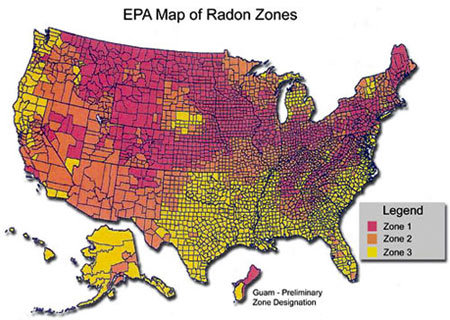
* Data supplied by Air Chek, Inc. as the world's most comprehensive database of short-term radon test results for the United States. See NJ EPA site for more here. Any home can have a radon problem. This means new and old homes, well-sealed and drafty homes, and homes with or without basements. In fact, you and your family are most likely to get your greatest radiation exposure at home. That is where you spend most of your time. Nearly 1 out of every 15 homes in the United States is estimated to have an elevated radon level (4 pCi/L or more). Elevated levels of radon gas have been found in homes in your state. Contact your state radon office for information about radon in your area. EPA and the Surgeon General Recommend That You Test Your Home Testing is the only way to know if you and your family are at risk from radon. EPA and the Surgeon General recommend testing all homes in areas known for radon presence. "Indoor radon gas is a national health problem. Radon causes thousands of deaths each year. Millions of homes have elevated radon levels. Most homes should be tested for radon. When elevated levels are confirmed, the problem should be corrected." You cannot predict radon levels based on state, local, and neighborhood radon measurements. Do not rely on radon test results taken in other homes in the neighborhood to estimate the radon level in your home. Homes which are next to each other can have different radon levels. Testing is the only way to find out what your home's radon level is. In some areas, companies may offer different types of radon service agreements. Some agreements let you pay a one-time fee that covers both testing and radon mitigation, if needed. Contact your state radon office to find out if these are available in your state. Radon is a radioactive gas. It comes from the natural decay of uranium that is found in nearly all soils. It typically moves up through the ground to the air above and into your home through cracks and other holes in the foundation. Your home traps radon inside, where it can build up. Any home may have a radon problem. This means new and old homes, well-sealed and drafty homes, and homes with or without basements. Radon from soil gas is the main cause of radon problems. RADON GETS IN THROUGH: 1. Cracks in solid floors 2. Construction joints 3. Cracks in walls 4. Gaps in suspended floors 5. Gaps around service pipes 6. Cavities inside walls 7. The water supply RADON SHOULD BE CHECKED IN OTH CELLAR/ASEMENT AREAS AND UPPER LEVELS-BEDROOMS |
||||||||||||||||||||||||||||||||||||||||||||||||||||||||||||||||
|
COPYRIGHT 1999-2012 NJIE ALL RIGHTS RESERVED. UNAUTHORIZED COPY OR LINKING TO THIS PAGE OR WEBSITE IS PROHIBITED
Note: the source code on this website is encoded to positively identify the infringement.














 NEW YORK