|
|||||
|
|||||
CALL Link to Spectral Analytical Sciences for more Detailed Important Infomation |



|
|||
Professional Scientific Investigations and Inspections for EMF & EMR Research has repeatedly shown higher incidences of Cancers in both children and adults, blood disorders, affecting reproduction and the central nervous system, human cell division and the immune system and other Electron Related Diseases (ERD). Pets are even at higher risk. |
We are certified and licensed court certifed experts for HV EMF EMR and RF (radio frequency experts with experience in both molecular biology and RF electronics technology we state without doubt that electromagnetic forces have the potential to interfere with human DNA replication, play a role transcription including sequential transversions, translocation, dislocation, cell function and other biological processes. These risk potential in amplified by known host (persons exposed) and ambient factors.
As scientists it is not surprising due to the highl level of complexity of these investigations and reports we provide that the EMF & EMR phenomena are misunderstood as per the error on this United Nations' World Health Organization's (WHO) page on the risks related to EMF EMR. (NOTE: THERE IS A SIGNIFIGANT MATERIAL TECHNICAL ERROR EVEN ON THIS UN WHO PAGE REGARDNG EMF/EMR-WE WILL NOT REPORT IT - MAYBE YOU CAN IDENTIFY IT?)
 |
We can test for A EMF/EMR RISK presence and intensity to determine and document the levels within your habitation or surrounding outdoor areas during and with our full indoor human habitation health risk study. Each case is VERY different. Often we identify other major risks during our highly integrated subClinical Investigations®. Call for a free consultation.
Some additional links from authoritative state and government sources in the United States:
- Electric and Magnetic Fields: National Institutes of Environmental Health Sciences
- Health Risks Associated With Living Near High Voltage Power Lines: Health Physics Society (July 2008)
- Electric and Magnetic Fields (EMF): Health Concerns: Connecticut Department of Public Health (April 2008)
- Electric and Magnetic Fields (EMF) Radiation From Power Lines: U.S. Environmental Protection Agency (May 2006)
- Electromagnetic Fields and Public Health: World Health Organization (May 2006)
- Magnetic Fields Exposure and Cancer: Questions and Answers: National Cancer Institute, U.S. National Institutes of Health (NIH) (April 2005)
- Electromagnetic Fields Explained: Arizona Association of Realtors (2003)
- Power Line Fields and Public Health: American Physical Society (1995)
The Effect of Extremely Low Frequencies
and Electro Magnetic Fields (EMF) upon Human Health
FOR EMF INVESTIGATIONS CALL
973-726-9559
In a 1992 the U.S. Department of Environmental Protection (EPA) report indicated that everyone is exposed to a complex mix of electromagnetic fields (EMF) of different frequencies that permeate our environment. Exposures to many EMF frequencies are increasing significantly as technology advances unabated and new applications are found.
While the enormous benefits of using electricity in everyday life and health care are unquestioned, during the past 20 years the general public has become increasingly concerned about potential adverse health effects of exposure to electric and magnetic fields at extremely low frequencies (ELF). Such exposures arise mainly from the transmission and use of electrical energy at the power frequencies of 50/60 Hz.
The World Health Organization (WHO) is addressing the associated health issues through the International Electromagnetic Fields Project. Any health consequence needs to be clearly identified and appropriate mitigation steps taken if deemed necessary. Present research results are often contradictory. This adds to public concern, confusion and lack of confidence that supportable conclusions about safety can be reached.
The purpose of this Fact Sheet is to provide information about ELF field exposure and its possible impacts on health within the community and the workplace. Information comes from a WHO presentation and review of this subject and other recent reviews by eminent authorities.
ELF electric and magnetic fields
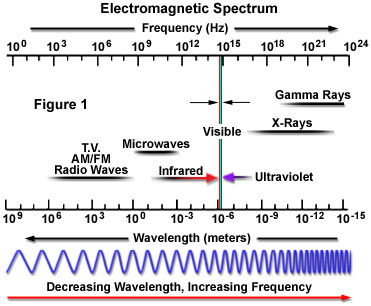
Electromagnetic fields consist of electric (E) and magnetic (H) waves traveling together as shown in the diagram below. They travel at the speed of light and are characterized by frequency and a wavelength. The frequency is simply the number of oscillations in the wave per unit time, measured in units of hertz (1 Hz = 1 cycle per second), and the wavelength is the distance traveled by the wave in one oscillation (or cycle).
ELF fields are defined as those having frequencies up to 300 Hz. At frequencies this low, the wavelengths in air are very long (6000 km at 50 Hz and 5000 km at 60 Hz), and, in practical situations, the electric and magnetic fields act independently of one another and are measured separately.
Electric fields arise from electric charges. They govern the motion of other charges situated in them. Their strength is measured in units of volt per meter (V/m), or kilovolt per meter(kV/m). When charges accumulate on an object they create a tendency for like or opposite charges to be repelled or attracted, respectively. The strength of that tendency is characterized by the voltage and is measured in units of volt, (V). Any device connected to an electrical outlet, even if the device is not switched on, will have an associated electric field that is proportional to the voltage of the source to which it is connected. Electric fields are strongest close the device and diminish with distance. Common materials, such as wood and metal, shield against them.
Magnetic fields arise from the motion of electric charges, i.e. a current. They govern the motion of moving charges. Their strength is measured in units of ampere per meter (A/m) but is usually expressed in terms of the corresponding magnetic induction measured in units of tesla, (T), millitesla (mT) or microtesla (µT). In some countries another unit called the gauss, (G), is commonly used for measuring magnetic induction (10,000 G = 1 T, 1 G = 100 µT, 1 mT = 10 G, 1 µT = 10 mG). Any device connected to an electrical outlet, when the device is switched on and a current is flowing, will have an associated magnetic field that is proportional to the current drawn from the source to which it is connected. Magnetic fields are strongest close to the device and diminish with distance. They are not shielded by most common materials, and pass easily through them.
Sources
Naturally occurring 50/60 Hz electric and magnetic field levels are extremely low; of the order of 0.0001 V/m, and 0.00001 µT respectively. Human exposure to ELF fields is primarily associated with the generation, transmission and use of electrical energy. Sources and typical upper limits of ELF fields found in the community, home and workplace are given below.
Community: Electrical energy from generating stations is distributed to communities via high voltage transmission lines. Transformers are used to lower the voltage for connections to residential distribution lines that deliver the energy to homes. Electric and magnetic fields underneath overhead transmission lines may be as high as 12 kV/m and 30 µT respectively. Around generating stations and substations, electric fields up to 16 kV/m and magnetic fields up to 270 µT may be found.
Home: Electric and magnetic fields in homes depend on many factors, including the distance from local power lines, the number and type of electrical appliances in use in the home, and the configuration and position of household electrical wiring. Electric fields around most household appliances and equipment typically do not exceed 500 V/m and magnetic fields typically do not exceed 150 µT. In both cases, field levels may be substantially greater at small distances but they do decrease rapidly with distance.
Workplace: Electric and magnetic fields exist around electrical equipment and wiring throughout industry. Workers who maintain transmission and distribution lines may be exposed to very large electric and magnetic fields. Within generating stations and substations electric fields in excess of 25 kV/m and magnetic fields in excess of 2 mT may be found. Welders can be subjected to magnetic field exposures as high as 130 mT. Near induction furnaces and industrial electrolytic cells magnetic fields can be as high as 50 mT. Office workers are exposed to very much smaller fields when using equipment such as photocopying machines and video display terminals.
Health effects
The only practical way that ELF fields interact with living tissues is by inducing electric fields and currents in them. However, the magnitude of these induced currents from exposure to ELF fields at levels normally found in our environment, is less than the currents occurring naturally in the body.
Electric Field Studies: Available evidence suggests that, apart from stimulation arising from electric charge induced on the surface of the body, the effects of exposures of up to 20 kV/m are few and innocuous. Electric fields have not been shown to have any effect on reproduction or development in animals at strengths over 100 kV/m.
Magnetic Field Studies: There is little confirmed experimental evidence that ELF magnetic fields can affect human physiology and behavior at field strengths found in the home or environment. Exposure of volunteers for several hours to ELF fields up to 5 mT had little effect on a number of clinical and physiological tests, including blood changes, ECG, heart rate, blood pressure, and body temperature.
Melatonin: Some investigators have reported that ELF field exposure may suppress secretion of melatonin, a hormone connected with our day-night rhythms. It has been suggested that melatonin might be protective against breast cancer so that such suppression might contribute to an increased incidence of breast cancer already initiated by other agents. While there is some evidence for melatonin effects in laboratory animals, volunteer studies have not confirmed such changes in humans.
Cancer: There is no convincing evidence that exposure to ELF fields causes direct damage to biological molecules, including DNA. It is thus unlikely that they could initiate the process of carcinogenesis. However, studies are still underway to determine if ELF exposure can influence cancer promotion or co-promotion. Recent animal studies have not found evidence that ELF field exposure affects cancer incidence.
Epidemiological Studies: In 1979 Wertheimer and Leeper reported an association between childhood leukemia and certain features of the wiring connecting their homes to the electrical distribution lines. Since then, a large number of studies have been conducted to follow up this important result. Analysis of these papers by the US National Academy of Sciences in 1996 suggested that residence near power lines was associated with an elevated risk of childhood leukemia (relative risk RR=1.5), but not with other cancers. A similar association between cancer and residential exposure of adults was not seen from these studies.
Many studies published during the last decade on occupational exposure to ELF fields have exhibited a number of inconsistencies. They suggest there may be a small elevation in the risk of leukemia among electrical workers. However, confounding factors, such as possible exposures to chemicals in the work environment, have not been adequately taken into account in many of them. Assessment of ELF field exposure has not correlated well with the cancer risk among exposed subjects. Therefore, a cause-and-effect link between ELF field exposure and cancer has not been confirmed.
NIEHS Panel: The US National Institute of Environmental Health Sciences (NIEHS) has completed its 5-year RAPID Program.The RAPID Program replicated and extended studies reporting effects with possible health implications, and conducted further studies to determine if indeed there was any health consequence from ELF field exposure. In June 1998, NIEHS convened an international Working Group to review the research results. NIEHS's international panel concluded, using criteria established by the International Agency for Research on Cancer (IARC), that ELF fields should be considered as a "possible human carcinogen".
"Possible human carcinogen" is the weakest of three categories ("possibly carcinogenic to humans", "probably carcinogenic to humans" and "is carcinogenic to humans") used by IARC to classify scientific evidence on potential carcinogens. IARC has two further classifications of scientific evidence: "is not classifiable" and "is probably not carcinogenic to humans", but the NIEHS Working Group considered there was enough evidence to eliminate these categories.
"Possible human carcinogen" is a classification used to denote an agent for which there is limited evidence of carcinogenicity in humans and less than sufficient evidence for carcinogenicity in experimental animals. Thus the classification is based on the strength of scientific evidence, not on the strength of carcinogenicity or risk of cancer from the agent. Thus, "possible human carcinogen" means limited credible evidence exists suggesting that exposure to ELF fields may cause cancer. While it cannot be excluded that ELF field exposure causes cancer from available evidence, further focused, high quality research is now needed to resolve this issue.
The decision of the NIEHS Working Group was based mainly on the appearance of consistency in epidemiological studies suggesting residence near power lines resulted in an apparently higher risk of leukemia children. Support for this association was found in studies relating childhood leukemia incidence to proximity to power lines and to magnetic fields measured for 24 hours in homes. Furthermore, the Working Group also found limited evidence for an increased occurrence of chronic lymphocyte leukemia in the occupational setting.
International EMF Project
WHO's International EMF Project has been established to work towards resolving the health issues raised by EMF exposure. Scientific reviews have been conducted and gaps in knowledge identified. This has resulted in a research agenda for the next few years that will ensure better health risk assessments can be made. A formal task group meeting to assess the results is scheduled by IARC in 2001. WHO will then adopt IARC's conclusions and complete an assessment of non-cancer health risks in 2002.
International Standards
The International Commission on Non-Ionizing Radiation Protection (ICNIRP) has published guidelines on exposure limits for all EMF. The guidelines provide adequate protection against known health effects and those that can occur when touching charged objects in an external electric field. Limits of EMF exposure recommended in many countries are broadly similar to those of ICNIRP, which is a non-governmental organization (NGO) formally recognized by WHO and a full partner in the International EMF Project. It will reassess its guidelines once the EMF Project has completed new health risk assessments.
Protective Measures
Large conducting objects such as metal fences, barriers or similar metallic structures permanently installed near high voltage electrical transmission lines should be grounded. If such objects are not grounded, the power line can charge them to a sufficiently high voltage that a person who comes into close proximity or contact with the object can receive a startling and uncomfortable shock. A person may also receive such a shock when touching a car or bus parked under or very near high voltage power lines.
General public: Since current scientific information is only weakly suggestive and does not establish that exposure to ELF fields at levels normally encountered in our living environment might cause adverse health effects, there is no need for any specific protective measures for members of the general public. Where there are sources of high ELF field exposure, access by the public will generally be restricted by fences or barriers, so that no additional protective measures will be needed.
Workers: Protection from 50/60 Hz electric field exposure can be relatively easily achieved using shielding materials. This is only necessary for workers in very high field areas. More commonly, where electric fields are very large, access of personnel is restricted. There is no practical, economical way to shield against ELF magnetic fields. Where magnetic fields are very strong the only practical protective method available is to limit of personnel.
EMF Interference
Strong ELF fields cause electromagnetic interference (EMI) in cardiac pacemakers or other implanted electro medical devices .Individuals using these devices should contact their doctor to determine their susceptibility to these effects. WHO urges manufacturers of these devices to make them much less susceptible to EMI.
Office workers may see image movement on the screen of their computer terminal. If ELF magnetic fields around the terminal are greater than about 1 µT (10 mG) this can cause interference with the electrons producing the image on the screen. A simple solution to this problem is to relocate the computer to another part of the room where the magnetic fields are below 1 µT. These magnetic fields are found near cables that provide electric power to office or apartment buildings, or around transformers associated with power supplies to buildings. The fields from these sources are generally well below the levels that cause any health concern.
Noise, Ozone and Corona
Noise in the form of a buzzing or humming sound may be heard around electrical transformers or high voltage power lines producing corona (see below). While the noise may be annoying, there are no EMF health consequences associated with these sounds.
Electrical devices such as photocopiers or any device using a high voltage to function may produce ozone, a colorless gas having a pungent smell. Electrical discharges in the air convert oxygen molecules into ozone. While people may easily smell the ozone, the concentrations produced around photocopiers and similar devices are well below health standards.
Corona or electrical discharges into the air are produced around high voltage power lines. It is sometimes visible on a humid night or during rainfall and can produce noise and ozone. Both the noise levels and ozone concentrations around power lines have no health consequence.
What should be done while research continues?
One of the objectives of the International EMF Project is to help national authorities weigh the benefits of using EMF technology against the detriment should any adverse health effects be demonstrated, and decide what protective measures, if any, may be needed. It will take some years for the required research to be completed, evaluated and published by WHO. In the meantime, WHO recommends:
- Strict adherence to existing national or international safety standards: Such standards, based on current knowledge, are developed to protect everyone in the population.
- Simple protective measures: Fences or barriers around strong ELF sources help preclude unauthorized access to areas where national or international exposure limits may be exceeded.
- Consultation with local authorities and the public in sitting new power lines: Obviously power lines must be sited to provide power to consumers. Despite the fact that ELF field levels around transmission and distribution lines are not considered a health risk, sitting decisions are often required to take into account aesthetics and public sensibilities. Open communication and discussion between the electric power utility and the public during the planning stages can help create public understanding and greater acceptance of a new facility.
- An effective system of health information and communication among scientists, governments, industry and the public can help raise general awareness of programmers to deal with exposure to ELF fields and reduce any mistrust and fears.
References for further reading
ICNIRP (1998) International Commission on Non-Ionizing Radiation Protection Guidelines for limiting exposure to time varying electric, magnetic and electromagnetic fields (up to 300 GHz). Health Physics 74(4), 494-522.
NIEHS (1998) Assessment of health effects from exposure to power-line frequency electric and magnetic fields. Portier CJ and Wolfe MS (eds) NIEHS Working Group Report, National Institute of Environmental Health Sciences of the National Institute of Health, Research Triangle Park, NC, USA, pp 523. Available from NIEHS
Repacholi M and Greenebaum B (1998) Interaction of static and extremely low frequency electric and magnetic fields with living systems: health effects and research needs. Bioelectromagnetics (In press). (Summary report of WHO scientific review meeting on static and ELF held in Bologna, 1997).
WHO (1997) WHO's Agenda for EMF Research. World Health Organization publication WHO/EHG/98.13, WHO Geneva. Also available on EMF web site
http://www.sdge.com/safety/emfLinks.shtml
http://www.who.int/docstore/peh-emf/publications/facts_press/fact_english.htm
http://www.who.int/mediacentre/factsheets/fs263/en/index.html
Towns, Localities and Cities Served in New Jersey
AREAS OF AVAILABILITY
NEW YORK NEW JERSY CONNECTICUT PENNSYLVANIA DELAWARE
CALL  NOW
NOW
IN SOMERSET COUNTY NEW JERSEY NJ - BEDMINSTER 07921 BERNARDS 07920 BERNARDSVILLE 07924 BOUND BROOK 08805 BRANCHBURG 08876 BRIDGEWATER 08807 FAR HILLS 07931 FRANKLIN TWP 08873 ASHI HOME INSPECTOR NJ GREEN BROOK 08812 HILLSBOROUGH 08844 MANVILLE 08835 MILLSTONE 08849 MONTGOMERY 08844 NORTH PLAINFIELD 07060 PEAPACK/GLADSTONE BORO 07977 RARITAN 08869 ROCKY HILL 08553 SOMERVILLE 08876 SOUTH BOUND NEW JERSEY HOME INSPECTOR BROOK 08880 WARREN 07059 WATCHUNG 07069
IN SUSSEX COUNTY NEW JERSEY NJ - ANDOVER 07821 AUGUSTA 07822 BRANCHVILLE 0827 BRANCHVILLE 07826 GLASSER O7837 MONTAGUE 07827 GREENDELL 07839 HOPATCONG 07843 07848 LAFAYETTE LAYTON 07851 MIDDLEVILLE 07855 NEWTON 07860 FREDON 07860 SPARTA 07871 STANHOPE 07874 STILLWATER 07875 SWARTSWOOD 07877 TRANQUILITY 07879 WALLPACK CENTER 07881
IN BERGEN COUNTY NEW JERSEY - ALPINE 07620 BERGENFIELD 07621 BOGOTA 07603 CARLSTADT 07072 CLIFFSIDE PARK 07010 CRESSKILL 07626 DEMAREST 07627 DUMONT 07628 - EAST RUTHERFORD 07073 EDGEWATER 07020 ELMWOOD PARK 07407 ENGLEWOOD 07631 ENGLEWOOD CLIFFS 07632 FAIRLAWN 07410 FORT LEE 07024 GARFIELD 07026 GLEN ROCK 07452 HACKENSACK HASBROUCK HEIGHTS 07604 - HAWORTH 07506 LEONIA 07605 LITTLE FERRY 07643 LODI 07644 LYNDHURST 07071 MAYWOOD 07607 - MOONACHIE 07074 NEW MELFORD 07646 NORTH ARLINGTON 07031 ORADELL 07649 PALLISADES PARK 07650 PARAMUS 07652 RIDGEFIELD 07657 - RIDGEFIELD PARK 07660 RIVER EDGE 07661 ROCHELLE PARK 07662 RUTHERFORD 07070 SOUTH HACKENSACK 07606 TEANECK 07666 TENAFLY 07670 TETERBORO 07608 WALLINGTON 07057 WOOD RIDGE 07075 EVERY HOME INSPECTION WILL BE CONDUCTED BY A CERTIFIED NJ HOME MOLD INSPECTOR NEW JERSEY.
ESSEX COUNTY WITH ZIP CODES
IN ESSEX COUNTY NEW JERSEY BELLEVILLE 07109 BLOOMFIELD 07003 CALDWELL CEDAR GROVE 07009 ESSEX FELLS 07021 FAIRFIELD 07004 GLEN RIDGE 07028 IRVINGTON 07111 LIVINGSTON 07039 NJ HOME INSPECTOR MAPLEWOOD 07040 MILLBURN 07041 MONTCLAIR 07042 NORTH CALDWELL 07006 NUTLEY 07110 ORANGE 07050 ROSELAND 07068 SOUTH ORANGE 07079 VERONA 07044 WEST CALDWELL 07006 WEST ORANGE 07052 NJ HOME MOLD INSPECTOR
HUDSON COUNTY WITH ZIP CODES
IN - HUDSON COUNTY NEW JERSEY NJ - BAYONNE 07002 GUTTENBERG 07093 HARRISON 07029 HOBOKEN 07030 JERSEY CITY 07308 07306 07310 KEARNY 07032 NORTH BERGEN 07047 SECAUCUS 07094 NEW JERSEY HOME INSPECTOR
HUNTERDON COUNTY WITH ZIP CODES
IN HUNTERDON COUNTY NEW JERSEY NJ ALEXANDRIA 08848 BETHLEHEM 08802 BLOOMSBURY 08804 CALIFON 07830 CLINTON TOWN 08809 CLINTON TWP 08801 FLEMINGTON 08822 FRANKLIN TWP 08868 FRENCHTOWN 08825 GLEN GARDNER 08826 HOME INSPECTOR NEW JERSEY HAMPTON 08827 HIGH BRIDGE 08829 HOLLAND 08848 KINGWOOD 08559 LAMBERTVILLE 08530 LEBANON BORO 08833 LEBANON TWP 08826 MILFORD 08848 RARITAN TWP 08822 READINGTON 08801 08870 08889 STOCKTON 08559 TEWKSBURY 08858 HOME INSPECTOR NJ UNION TWP 08860 WEST AMWELL 08530
MIDDLESEX COUNTY WITH ZIP CODES
IN MIDDLESEX COUNTY NEW JERSEY NJ AVENEL 07001 BONHAMTOWN 08837 CARTERET 07008 CLIFFWOOD 07721 COLONIA 07067 CRANBURY 08512 DAYTON 08810 DUNELLEN 08812 EAST BRUNSWICK 08816 EDISON 08817 08837 08820 ENGLISHTOWN 07726 FORDS 08863 HELMETTA 08828 HIGHLAND PARK 08904 HOME INSPECTOR NJ HIGHTSTOWN 08520 ISELIN 08830 JAMESBURG 08831 HOME INSPECTOR NJ KEASBEY 08832 KENDALL PARK 08824 KINGSTON 08828 MATAWAN 07747 MENLO PARK 08837 METUCHEN 08840 MIDDLESEX 08846 MILLTOWN 08850 MONMOUTH JUNCTION 08852 MONROE 08831 NJ HOME INSPECTOR NEW BRUNSWICK 08901 NORTH BRUNSWICK 08902 OLD BRIDGE 08857 PARLIN 08859 PERTH AMBOY 08861 PISCATAWAY PISCATAWAYTOWN 08817 PLAINSBORO 08536 PORT READING 07064 PRINCETON 08540 SAYREVILLE 08871 08872 SEWAREN 07077 SOUTH AMBOY 08878 08879 SOUTH BRUNSWICK 08852 HOME INSPECTOR NJ SOUTH PLAINFIELD 07080 SOUTH RIVER 08882 SPOTSWOOD 08884 WOODBRIDGE 07095 NJ
MERCER COUNTY WITH ZIP CODES
IN MERCER COUNTY NEW JERSEY NJ - EAST WINDSOR 08520 EWING 08628 HAMILTON 08650 HIGHTSTOWN 08520 HOPEWELL 08525 LAWRENCE 08648 PENNINGTON 08534 PRINCETON 08542 08540 NEW JERSEY HOME INSPECTOR WASHINGTON 08691 WEST WINDSOR 08550
MONMOUTH COUNTY WITH ZIP CODES
IN MONMOUTH COUNTY NEW JERSEY NJ - ABERDEEN 07747 ALLENHURST 07711 ALLENTOWN 08501 ASBURY PARK 07712 ATLANTIC HIGHLANDS 07716 AVON-BY-THE-SEA 07717 BELMAR 07719 BRADLEY BEACH 07720 BRIELLE 08730 COLTS NECK 07720 DEAL 07723 EATONTOWN 07724 HOME INSPECTOR NJ ENGLISHTOWN 07726 FAIR HAVEN 07704 FARMINGDALE 07727 FREEHOLD BORO 07728 FREEHOLD TWP 07728 HIGHLANDS 07748 HOLMDEL 07733 HOWELL 07731 INTERLAKEN 07712 KEANSBURG 07734 KEYPORT 07735 LITTLE SILVER 07739 07701 LOCH ARBOUR VILLAGE 07712 LONG BRANCH 07740 MANASQUAN 08736 MARLBORO 07746 MATAWAN 07747 NEW JERSEY HOME INSPECTOR MIDDLETOWN 07748 MILLSTONE 07726 MONMOUTH BEACH 07750 NEPTUNE CITY 07753 NEPTUNE TWP 07753 OCEAN 07755 OCEANPORT 07757 RED BANK 07701 ROOSEVELT 08555 RUMSON 07760 SEA BRIGHT 07760 SEA GIRT 08750 SHEWSBURY BORO 07702 SHREWSBURY TWP 07702 SOUTH BELMAR 07719 SPRING LAKE 07762 SPRING LAKE HEIGHTS 07762 TINTON FALLS 07724 CERTIFIED HOME INSPECTOR NJ UNION BEACH 07735 UPPER FREEHOLD TWP 08514 WALL TWP 07719 WEST LONG BRANCH 07764
OCEAN COUNTY WITH ZIP CODES
IN UPPER OCEAN COUNTY NEW JERSEY NJ - BAY HEAD 08742 BEACHWOOD 08722 BERKELEY 08721 BRICK 08720 DOVER 08753 ISLAND HEIGHTS 08732 JACKSON 08701 LAKEHURST 08733 LAKEWOOD 08701 NJ HOME INSPECTOR LAVALLETTE 08735 MANCHESTER 08733 MANTOLOKEN 08738 PINE BEACH 08741 PLUMSTED 08533 PT. PLEASANT BORO 08742 POINT PLEASANT BEACH 08742 SEASIDE HEIGHTS 08751 SOUTH TOMS RIVER 08757
IN PASSAIC COUNTY NEW JERSEY NJ - BLOOMINGDALE 07403 CLIFTON 07001 HALEDON 07508 HAWTHORNE 07506 LITTLE FALLS 07424 NORTH HALEDON 07508 PASSIAC 07055 PATERSON 07005 ASHI HOME INSPECTOR POMPTON LAKES 07442 PROSPECT PARK 07508 RINGWOOD 07456 TOTOWA 07512 WANAQUE 07465 WAYNE 07470 WEST MILFORD 07480 WEST PATERSON 07424
IN UNION COUNTY NEW JERSEY NJ - BERKELEY HEIGHTS 07922 CLARK 07066 CRANFORD 07016 ELIZABETH 07201 FANWOOD 07023 GARWOOD 07027 HILLSIDE 07205 KENILWORTH 07033 LINDEN 07036 MOUNTAINSIDE 07092 NEW PROVIDENCE 07974 PLAINFIELD 07061 RAHWAY 07065 CERTIFIED HOME INSPECTOR NJ ROS
WESTCHESTER COUNTY NEW YORK Amawalk 10501, Ardsley 10502, Ardsley Hdsn 10503, Ardsley on Hudson 10503, Armonk 10504, Baldwin Place 10505, Bedford 10506, Bedford Corners 10549, Bedford Cors 10549, Bedford Hills 10507, Briarcliff 10510, Briarcliff Manor 10510, Bronxville 10708, Buchanan 10511, Chappaqua 10514, Cortlandt Manor 10567, Cortlandt Mnr 10567, Crompond 10517, Cross River 10518, Croton Falls 10519, Croton Hdsn 10520, Croton Hdsn 10521, Croton on Hudson 10520, Croton on Hudson 10521, Crugers 10521, Dobbs Ferry 10522, Eastchester 10707, Eastchester 10709, Elmsford 10523, Fleetwood 10552, Goldens Brg 10526, Goldens Bridge 10526, Granite Spgs 10527, Granite Springs 10527, Harrison 10528, Hartsdale 10530, Hastings Hdsn 10706, Hastings on Hudson 10706, , Hawthorne 10532, Heathcote 10583, Irvington 10533, Jefferson Valley 10535, Jefferson Vly 10535, Katonah 10536, Larchmont 10538, Lincolndale 10540, Mamaroneck 10543, Maryknoll 10545, Millwood 10546, Mohegan Lake 10547, Montrose 10548, Mount Kisco 10549, Mount Vernon 10550, Mount Vernon 10551, Mount Vernon 10552, Mount Vernon 10553, N Tarrytown 10591, N White Plains 10603, N White Plns 10603, New Rochelle 10801, New Rochelle 10802, New Rochelle 10804, New Rochelle 10805, North Castle 10504, North Salem 10560, North Tarrytown 10591, Ossining 10562, Peekskill 10566, Pelham 10803, Pleasantville 10570, Port Chester 10573, Pound Ridge 10576, Purchase 10577, Purdys 10578, Rye 10580, , Rye Brook 10573, Scarborough 10510, Scarsdale 10583, Shenorock 10587, Shrub Oak 10588, Sleepy Hollow 10591, Somers 10589, South Salem 10590, Tarrytown 10591, Thornwood 10594, Tuckahoe 10707, Valhalla 10595, Verplanck 10596, W Harrison 10604, Waccabuc 10597, West Harrison 10604, White Plains 10601, White Plains 10602, White Plains 10603, White Plains 10604, White Plains 10605, White Plains 10606, White Plains 10607, White Plains 10610, Wykagyl 10804, Yonkers 10701, Yonkers 10702, Yonkers 10703, Yonkers 10704, Yonkers 10705, Yonkers 10706, Yonkers 10707, Yonkers 10708, Yonkers 10709, Yonkers 10710, Yorktown Heights 10598, Yorktown Hts 10598
ROCKLAND COUNTY NEW YORK Airmont 10952, Bardonia 10954, Bear Mountain 10911, Blauvelt 10913, Chestnut Rdg 10977, Chestnut Ridge 10977, Congers 10920, Garnerville 10923, Haverstraw 10927, Hillburn 10931, Monsey 10952, Montebello 10901, Nanuet 10954, New City 10956, Nyack 10960, Orangeburg 10962, Palisades 10964, Pearl River 10965, Piermont 10968, Pomona 10970, Sloatsburg 10974, Sparkill 10976, Spring Valley 10977, Stony Point 10980, Suffern 10901, Tallman 10982, Tappan 10983, Thiells 10984, Tomkins Cove 10986, Valley Cottage 10989, Vly Cottage 10989, W Haverstraw 10993, West Haverstraw 10993, West Nyack 10994
ORANGE COUNTY NEW YORK Arden 10910, Bellvale 10912, Blooming Grove 10914, Blooming Grv 10914, Bullville 10915, Campbell Hall 10916, Central Valley 10917, Central Vly 10917, Chester 10918, Circleville 10919, Cornwall 12518, Cornwall Hdsn 12520, Cornwall on Hudson 12520, Cuddebackville 12729, Cuddebackvlle 12729, Florida 10921, Fort Montgomery 10922, Ft Montgomery 10922, Godeffroy 12729, Goshen 10924, Greenwood Lake 10925, Greenwood Lk 10925, Harriman 10926, Highland Falls 10928, Highland Fls 10928, Highland Mills 10930 , Highland Mls 10930, Howells 10932, Huguenot 12746, Johnson 10933, Maybrook 12543, Mid Hudson 12555, Middletown 10940, Middletown 10941, Monroe 10949, Monroe 10950, Montgomery 12549, Mountainville 10953, New Hampton 10958, New Milford 10959, New Windsor 12553, Newburgh 12550, Newburgh 12551, Newburgh 12552, Newburgh 12553, Newburgh 12555, Otisville 10963, Pine Bush 12566, Pine Island 10969, Port Jervis 12771, Rock Tavern 12575 , Salisbury Mills 12577, Salisbury Mls 12577, Scotchtown 10940, Scotchtown 10941, Scotchtown Branch 10940, Scotchtown Branch 10941, Slate Hill 10973, Southfields 10975, Sparrow Bush 12780, Sparrowbush 12780, Sterling Forest 10979, Sterling Frst 10979, Sugar Loaf 10981, Thompson Rdg 10985, Thompson Ridge 10985, Tuxedo Park 10987, Unionville 10988, Vails Gate 12584, Walden 12586, Warwick 10990, Washingtonville 10992, Washingtonvle 10992, West Point 10996, West Point 10997, Westtown 10998
Barryville 12719, Bethel 12720, Bloomingburg 12721, Burlingham 12722, Callicoon 12723, Callicoon Center 12724, Callicoon Ctr 12724, Claryville 12725, Cochecton 12726, Cochecton Center 12727, Cochecton Ctr 12727, Eldred 12732, Fallsburg 12733, Ferndale 12734, Forestburgh 12777, Fremont Center 12736, Fremont Ctr 12736, Glen Spey 12737, Glen Wild 12738, Grahamsville 12740, Hankins 12741, Harris 12742, Highland Lake 12743, Hortonville 12745 , Hurleyville 12747, Jeffersonville 12748, Jeffersonvlle 12748, Kauneonga Lake 12749, Kauneonga Lk 12749, Kenoza Lake 12750, Kiamesha Lake 12751, Lake Huntington 12752, Lew Beach 12758, Liberty 12754, Livingstn Mnr 12758, Livingston Manor 12758, Lk Huntington 12752, Loch Sheldrake 12759, Loch Sheldrke 12759, Long Eddy 12760, Mongaup Valley 12762, Mongaup Vly 12762, Monticello 12701, Monticello 12777, Mountain Dale 12763, Narrowsburg 12764, Neversink 12765, North Branch 12766, Obernburg 12767, Parksville 12768, Phillipsport 12769, Pond Eddy 12770, Port Jervis 12785, Rock Hill 12775, Roscoe 12776, S Fallsburg 12779, Smallwood 12778, South Fallsburg 12779, Summitville 12781, Sundown 12740, Swan Lake 12783, Thompsonville 12784, Westbrookville 12785, Westbrookvlle 12785, White Lake 12786, White Sulphur Springs 12787, Wht Sphr Spgs 12787, Woodbourne 12788, Woodridge 12789, Wurtsboro 12790, Youngsville 12791, Yulan 12792